Where sea meets supper
From Atlantic upwelling zones to enclosed Mediterranean gulfs, coastal topography dictates salinity, phytoplankton, and dining culture.
Mapping Europe by Oceanic Terroir
National frontiers are artificial constructs to the marine world. A red mullet landed off Corsica shares far more with an Aegean catch than an Atlantic cod landed in Normandy. Understanding European coastal dining requires analyzing four distinct marine theaters, each defined by tidal range, water depth, and prevailing winds.
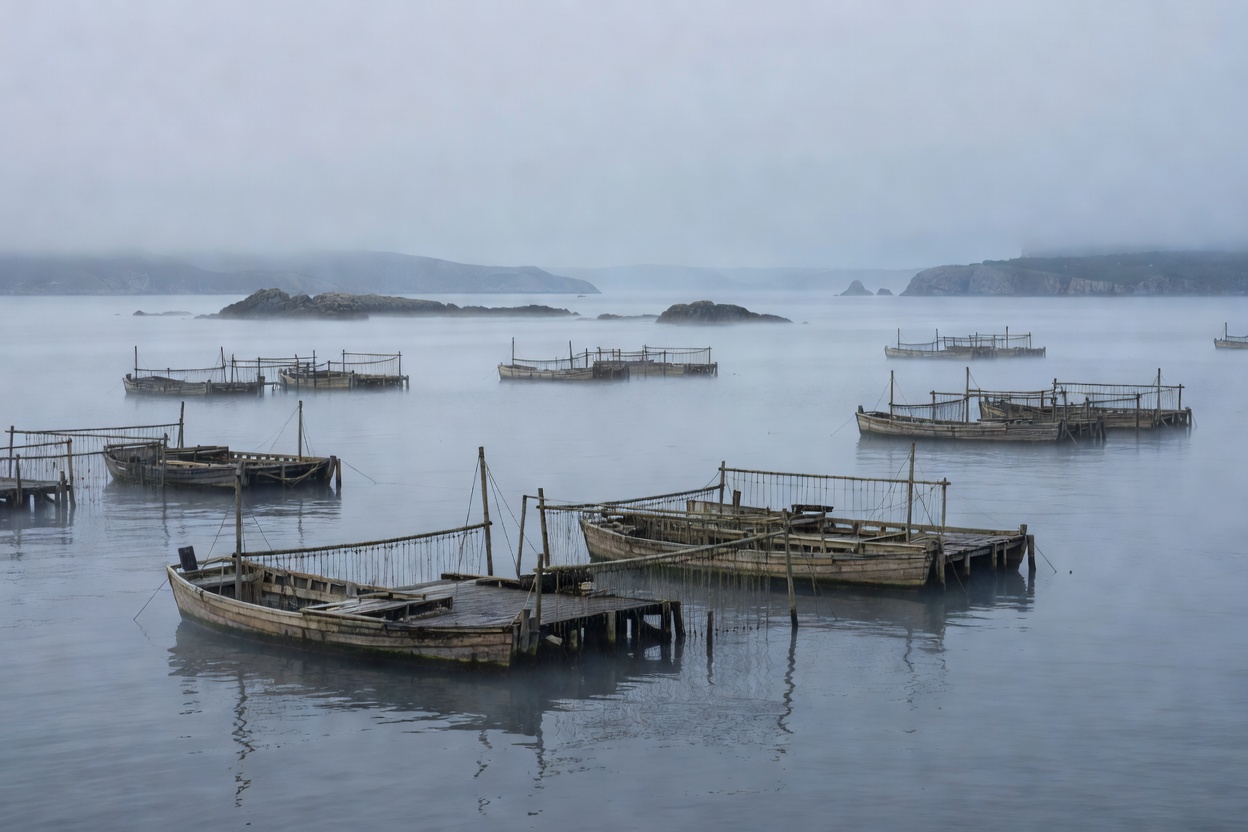
The Galician Rías & Costa da Morte
Nowhere in Europe is marine biomass denser than in the Galician Rías Baixas and Altas. Deep, cold Atlantic waters are drawn upwards by offshore wind patterns, flooding these submerged river valleys with intense plankton. Wooden rafts (bateas) sustain millions of sweet mussels (mejillones), while the outer rocky capes endure brutal waves that yield world-class spider crabs (centollo) and goose barnacles.
Dining Identity: High-humidity tavern dining, simple wood board presentations, steaming pots, and bracing young Albariño poured into white ceramic bowls.
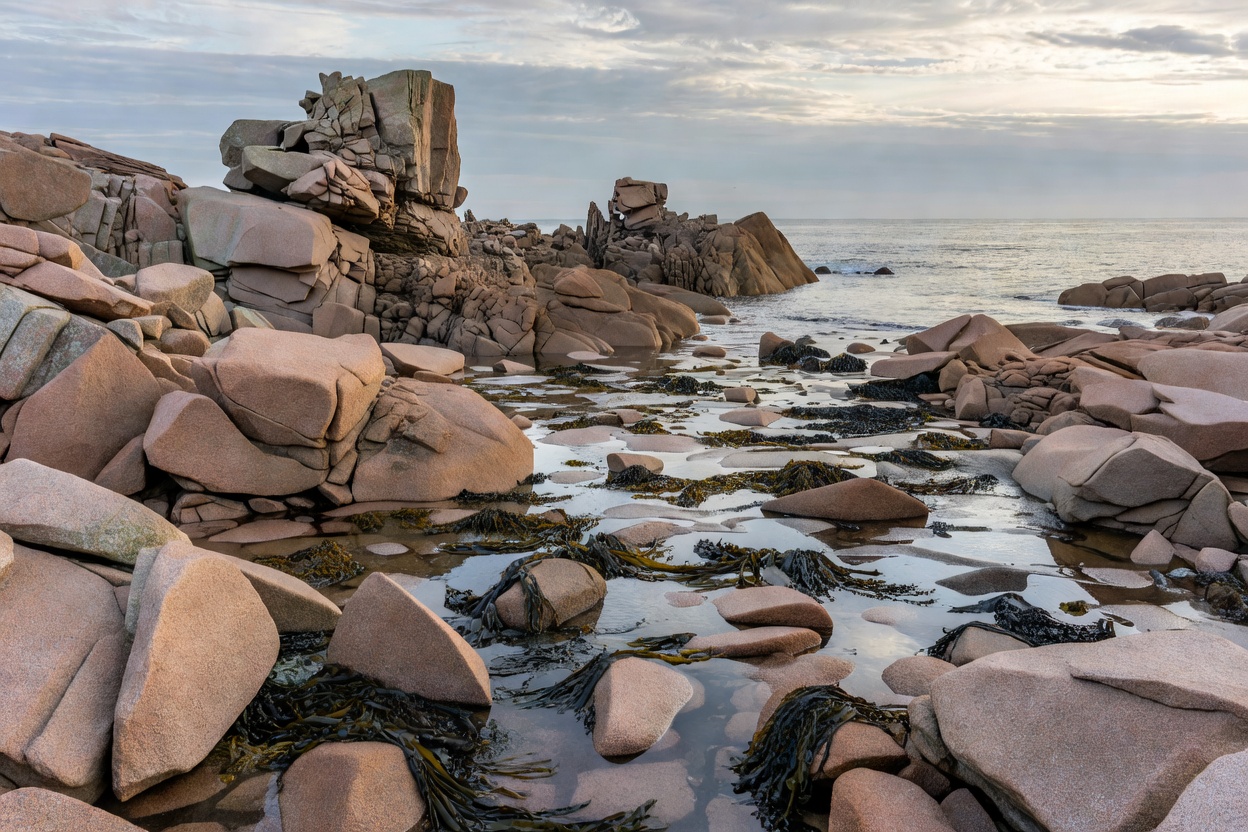
Brittany’s Armorican Littoral
Brittany experiences some of the most dramatic tidal swings on Earth—tides in the Bay of Mont Saint-Michel can recede by over 14 kilometers. This dramatic drainage continuously purges and oxygenates the oyster estuaries of Cancale, Saint-Philibert, and the Belon River.
Dining Identity: Towering iced metal platters, raw bivalve appreciation, crisp rye breads with unpasteurized churned butter, and dry cider served in earthen bowls.
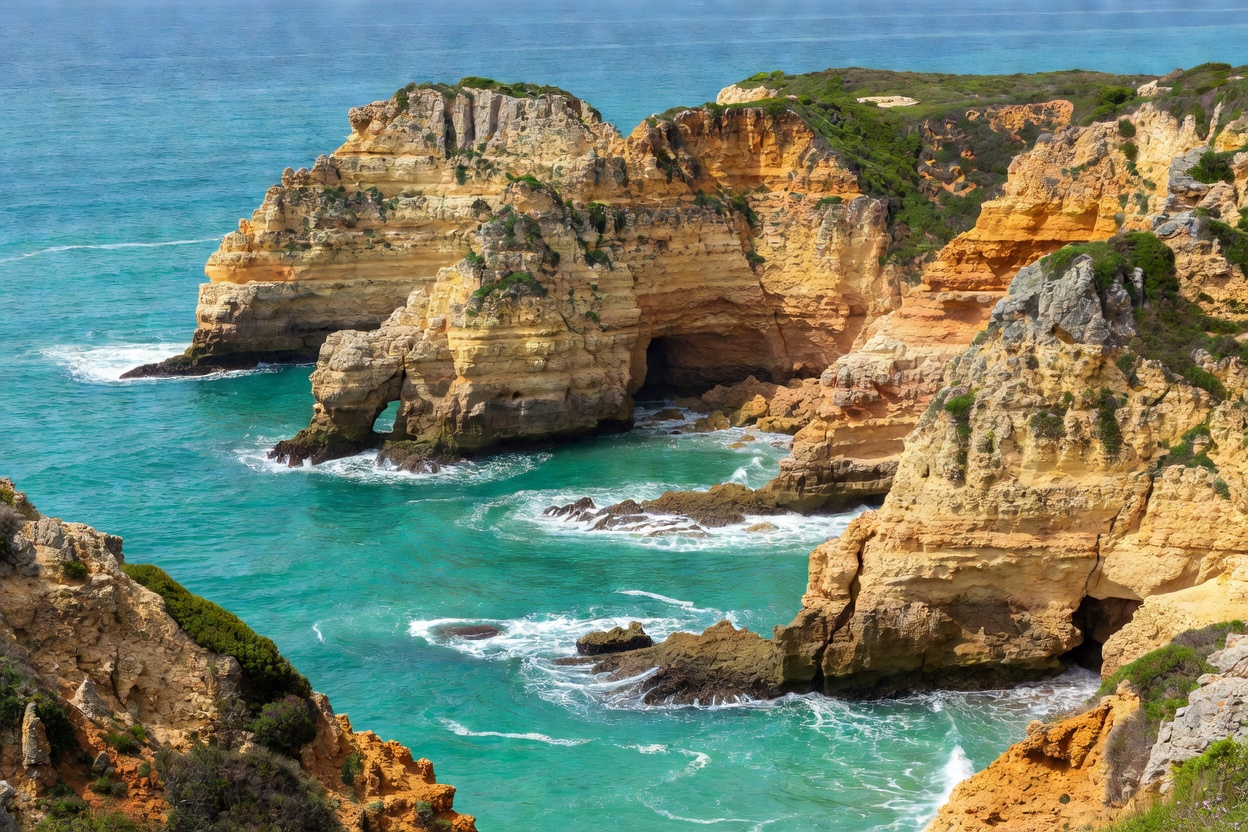
Costa Vicentina & The Ria Formosa
The wild, wind-blasted cliffs of southwest Portugal meet the sheltered lagoon maze of the Ria Formosa. Clams (amêijoas à Bulhão Pato) thrive in the sandy shallows, while offshore tuna migration paths historically gave rise to traditional armação netting systems.
Dining Identity: Casual open-air churrasqueiras perfumed with charcoal smoke, coarse salt-crusted seabream, garlic and coriander infusions, and cold Sagres or Vinho Verde.
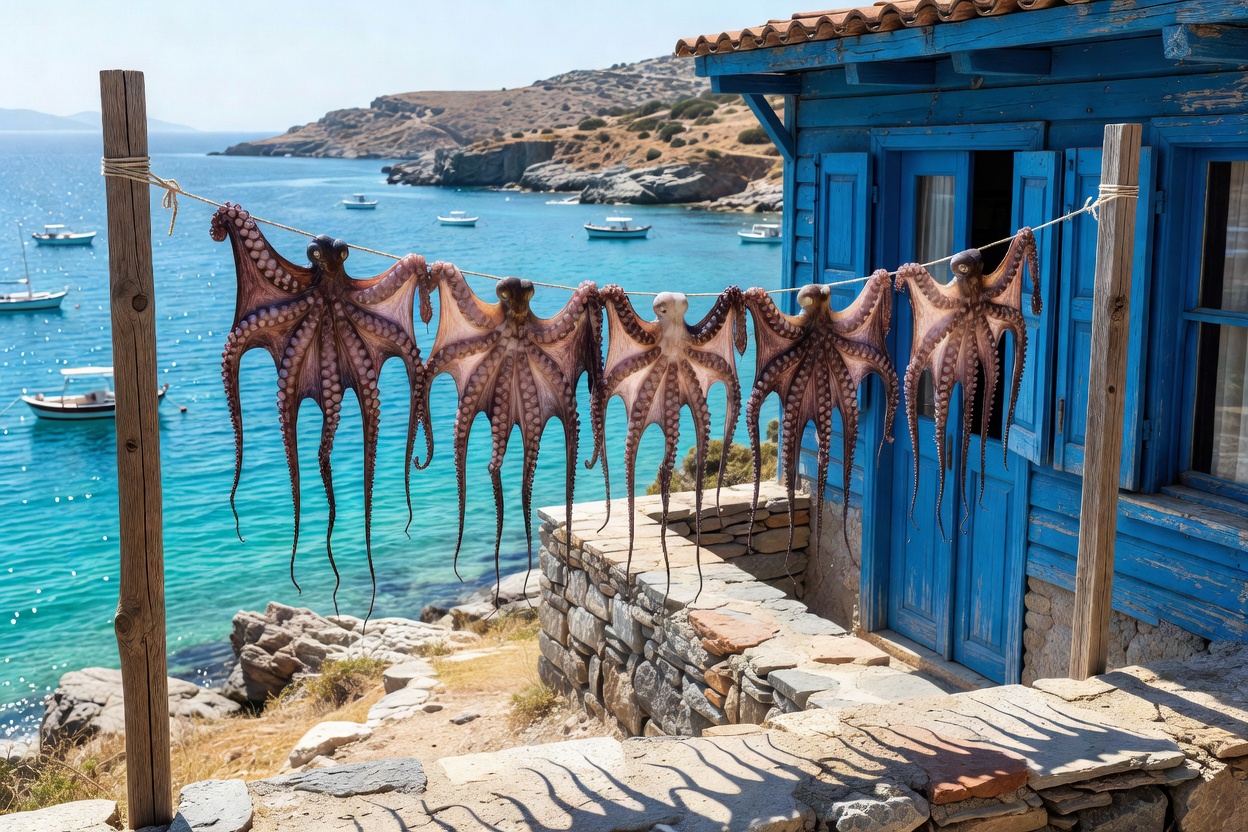
The Aegean Archipelago
The Aegean is a nutrient-scarce, highly saline sea where fish grow slowly, producing firm, concentrated flesh. Octopus is sun-dried on clotheslines along harbor quays to evaporatively extract moisture before meeting olive-wood coals.
Dining Identity: Bare marble-topped tables inches from salt water, shared small-plate mezedes, wild oregano, fresh lemons, and distilled anise ouzo cloudy with ice water.
Key Regional Ports & Fish Auction Docks
| Port Harbor | Littoral Zone | Fleet Type | Notable Local Landing |
|---|---|---|---|
| Bermeo | Basque Cantabrian Coast | Inshore wooden purse-seiners | Bonito del Norte (Albacore), Anchovies |
| O Grove | Rías Baixas (Galicia) | Shellfish raking skiffs (bateeiros) | Centollo (Spider Crab), Razor Clams |
| Le Guilvinec | Finistère South (France) | Day-boat trawlers (côtiers) | Langoustines (Demoiselles de Guilvinec) |
| Olhão | Ria Formosa (Algarve) | Estuarine flat skiffs | Amêijoas (Grooved Carpet Shells) |
| Sète | Thau Lagoon (Gulf of Lion) | Lagoon oyster farmers & trawlers | Huîtres de Bouzigues, Sea Bream (Daurade) |
| Naxos Town | Cyclades (Aegean) | Artisanal longline kaikia | Octopus, Skaros (Parrotfish), Barbouni |