Tables rooted in place
A rigorous examination of European seafood dining rooms whose character is inseparable from local fish auctions, artisanal wooden fishing fleets, and ancestral cooking methods.
The Architecture of Authentic Maritime Dining
Across the continent, true coastal dining stands in fierce opposition to uniform metropolitan luxury. The greatest seafood establishments rarely offer encyclopedic wine books with velvet banquettes; instead, their prestige rests on generational priority at the municipal fish auction (la lonja in Spain, la criée in France) and equipment customized over decades to handle specific maritime textures.
Whether examining the charcoal embers of the Cantabrian coast, the copper steaming vessels of the southern Portuguese littoral, or the raw seawater cisterns of Venetian lagoon houses, these tables operate as living extensions of their waters.
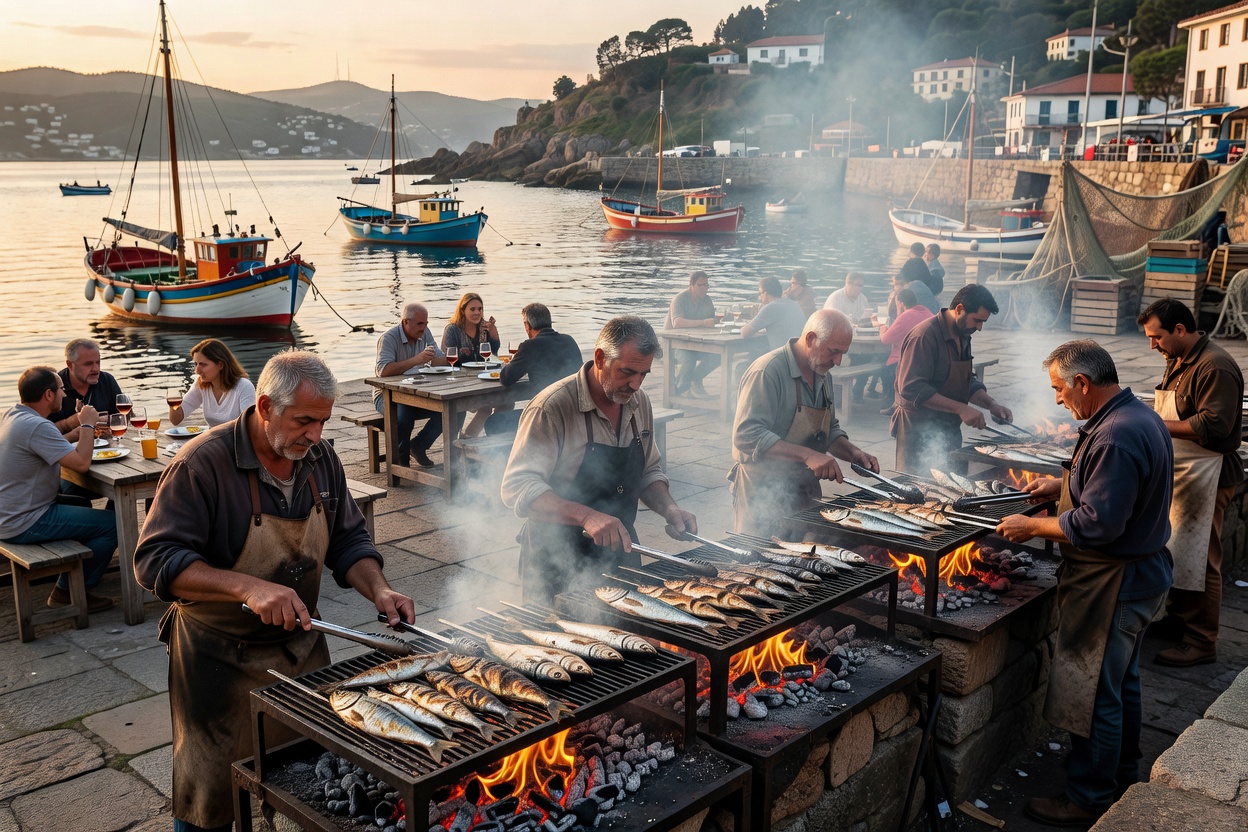
Elkano & Kaia Kaipe (Getaria, Spain)
Getaria remains the spiritual capital of the Basque whole-fish grilling tradition. At Elkano, founded by Pedro Arregui, whole wild turbot (rodaballo) is cooked in bespoke metal mesh baskets over lump charcoal. The mastery lies in understanding the fish's anatomy: the darker skin absorbs gentle char, while the lighter skin cooks in its own collagen. Diners receive the head, gelatinous cheeks, and fin cartilage, unlocking depths of oceanic flavor inaccessible through filleting.
Across the cobbled port alley, Kaia Kaipe balances the tradition with cold lobster cisterns kept alive directly with sea currents pumped from the Bay of Biscay.
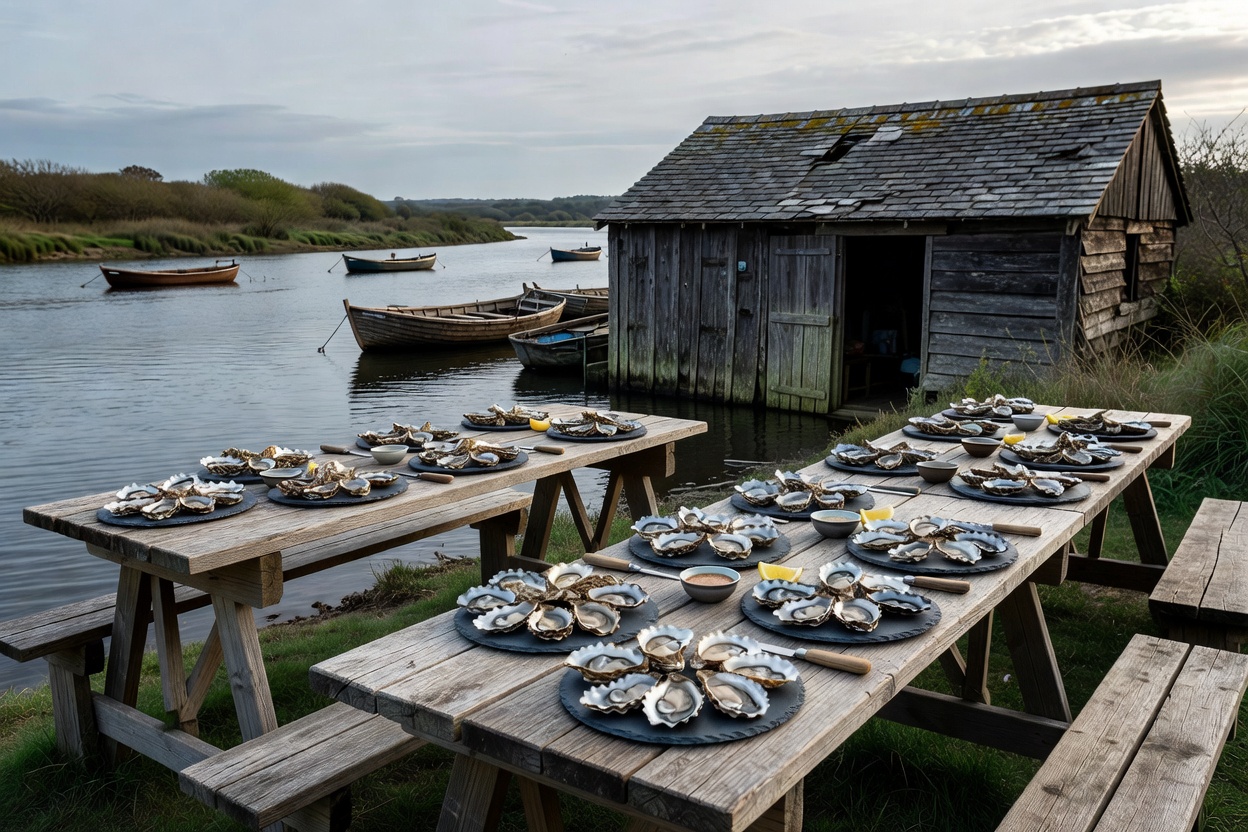
Chez Jacky (Riec-sur-Bélon, France)
Sited where the Belon River meets the Atlantic tide, Chez Jacky represents the purity of Brittany's oyster dynasty. Founded in the 19th century along the tidal mudflats, oysters here are tasted within yards of their refining basins. The dining tables rest on stone terraces where visitors order flat Belon oysters graded from 0 to 0000, accompanied only by crusty sourdough, churned demi-sel butter from Cornouaille, and chilled Muscadet sur Lie.
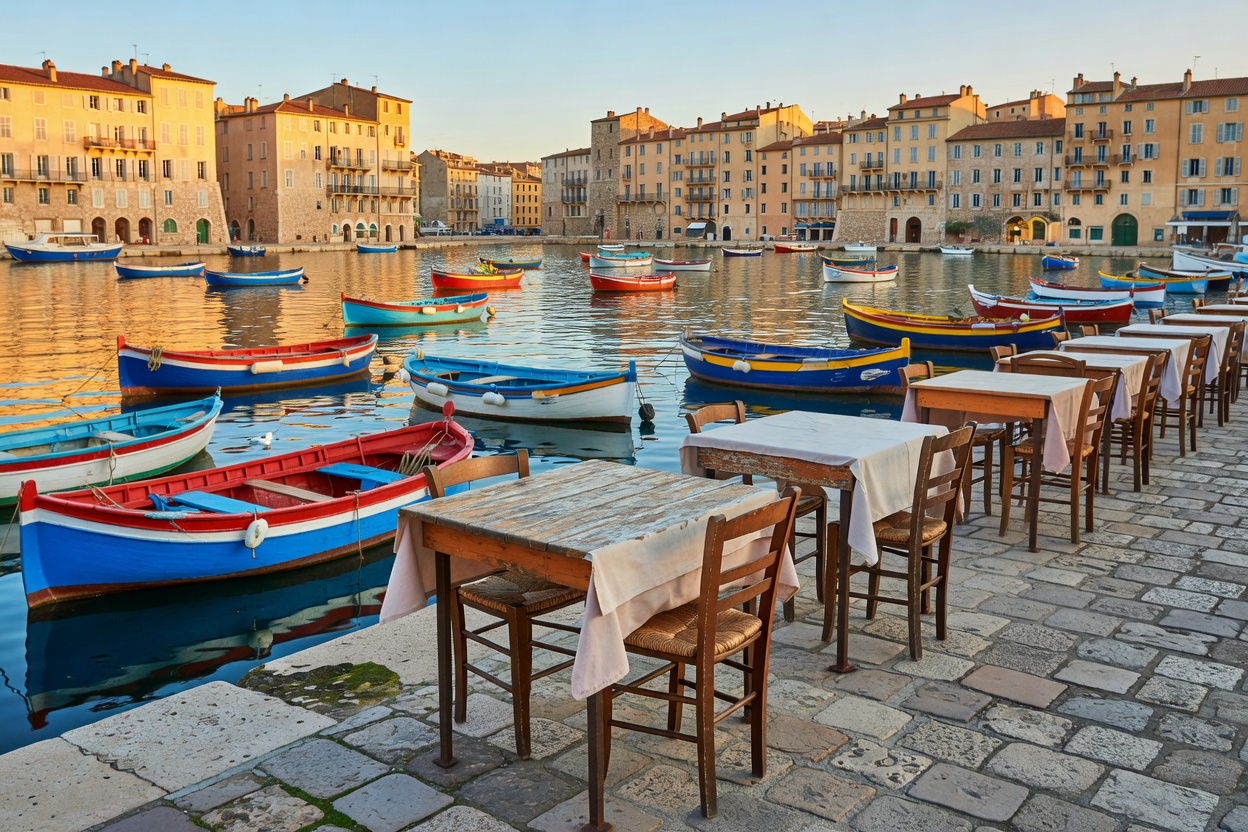
Chez Michel & L'Épuisette (Marseille, France)
Overlooking the rocky inlet of Vallon des Auffes, Chez Michel preserves the unbending doctrine of the Bouillabaisse Charter. Unlike commercial tourist variants, authentic preparation presents the whole bony rockfish—rascasse, saint-pierre, grondin, and conger—raw at tableside before flash-boiling them in saffron broth. The broth is served first with spicy garlic rouille and croutons; the sculpted fish carcasses follow as a distinct course.
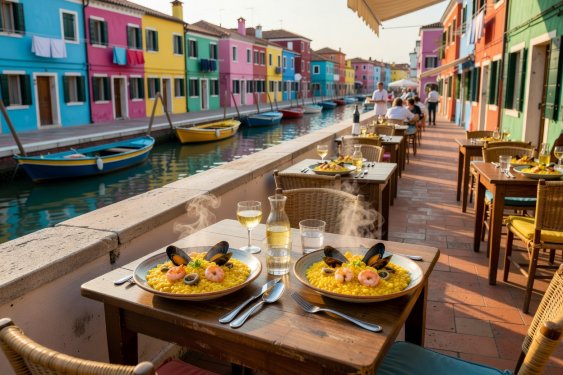
Trattoria Da Romano (Burano, Italy)
On the lace-making island of Burano, Da Romano has upheld lagoon culinary lore since the early 20th century. Their Risotto di Gò transforms the humble, spiny grass goby fish of the Venice shallows into an intensely creamy, mineral risotto that defines the delicate brackish ecology of the lagoon.
Cervejaria Ramiro (Lisbon, Portugal)
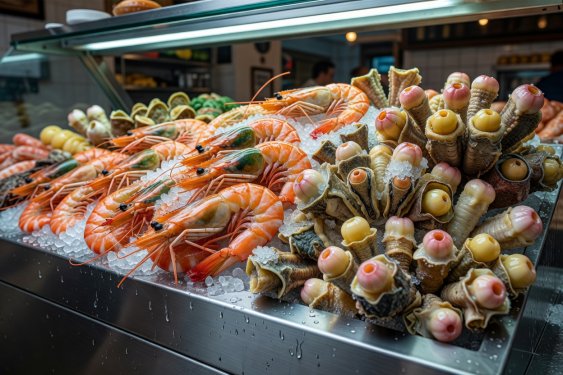
An institution of democratic shellfish celebration. In a bustling, tile-lined hall, servers dispatch trays of scarlet carabinero prawns grilled with sea salt, sweet brown crab (sapateira) with dressed back-shell roe, and climax the meal with the customary prego steak sandwich.
Structural Comparison: Coastal Seafood Sanctuaries
| Establishment | Port Location | Primary Heat / Method | Defining Seasonal Catch |
|---|---|---|---|
| Elkano | Getaria, Basque Country | Open charcoal parilla grills | Wild Turbot (Rodaballo), Chipirones |
| Chez Michel | Marseille, France | Emulsified saffron reduction | Rascasse, Vive, Conger eel |
| Chez Jacky | Riec-sur-Bélon, France | Raw on ice / shucked to order | Flat Belon Oysters (Ostrea edulis) |
| Da Romano | Burano, Venice, Italy | Slow risotto mantecatura | Gò (Grass Goby), Moèche (soft-shell crab) |
| Cervejaria Ramiro | Lisbon, Portugal | Boiled in brine / flat iron plancha | Carabineiro prawns, Percebes, Sapateira |
| O Gato Negro | Santiago de Compostela, Galicia | Copper cauldron water bath | Pulpo á Feira, Volandeiras |